There's a good chance you've walked past dozens of geocaches without ever knowing it. They're tucked under park benches, magnetised to the back of road signs, wedged into stone walls and hidden in hollow logs — a worldwide treasure hunt running quietly in the background of everyday places. Once you know it's there, you can't unsee it. And the good news is you almost certainly already own everything you need to start.
Geocaching is simple at its core: someone hides a small container, posts its coordinates online, and you use those coordinates to find it. When you do, you sign the logbook inside, maybe swap a small trinket, and put it back exactly as you found it. That's the whole game. The depth comes from the variety — some caches are a thirty-second walk from your car, others demand a full day's hike and a head for puzzles.
Your First Find
Start with the free app on your phone. It maps every nearby cache and rates each one for difficulty and terrain on a one-to-five scale. For your very first hunt, filter for a low difficulty and low terrain rating — something marked 1.5/1.5 or easier. These are designed to be found, and that early win is what hooks people. Read the description and the recent logs before you set off; other finders often leave gentle hints about where to look without spoiling it outright.
When you arrive, put the phone away for the last few metres. GPS gets you within about five to ten metres, but it won't point at the exact spot. That final stretch is on you — and it's the best part. Think like the person who hid it. Where would you stash something out of sight of passers-by?
What to Bring
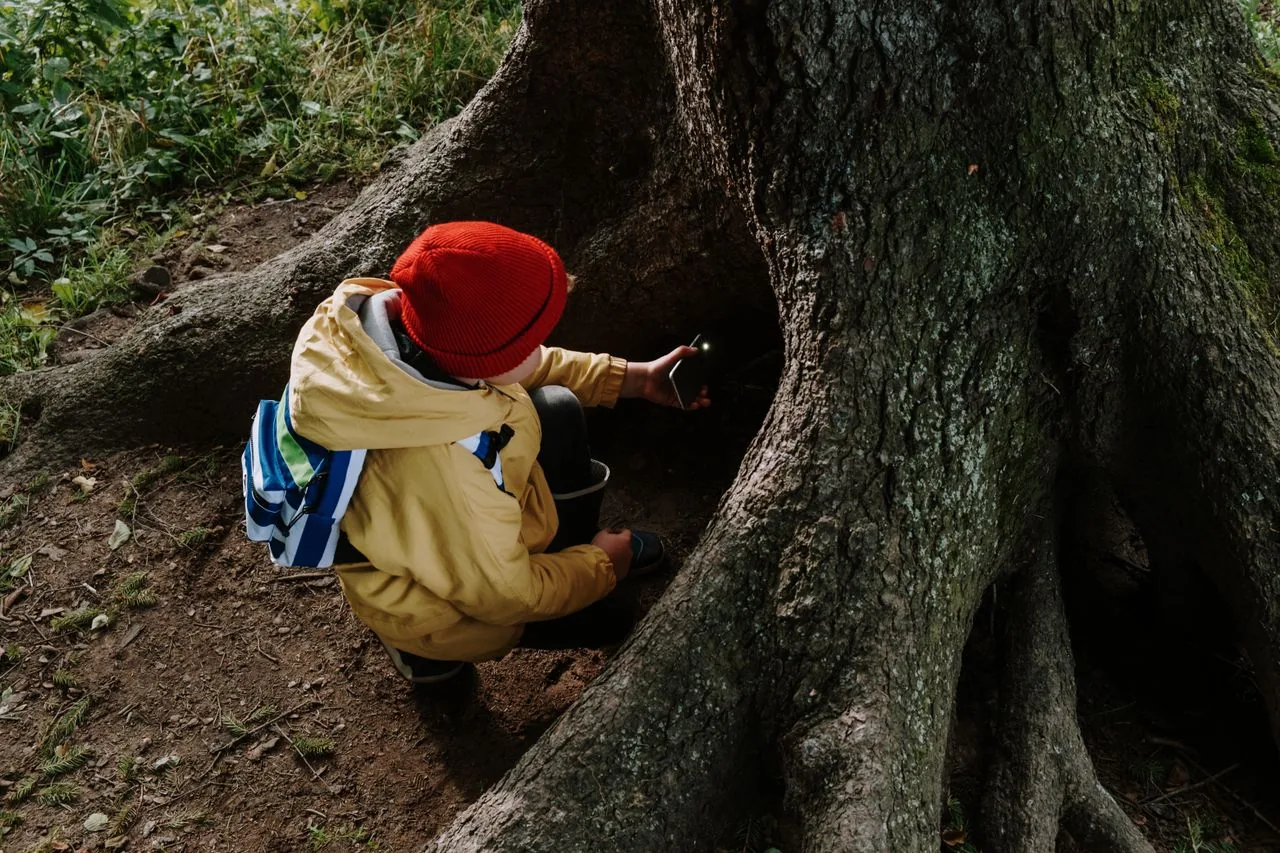
You need almost nothing to begin: a charged phone and a pen to sign tiny logs. As you get keener, a few extras earn their place — tweezers for fishing rolled logs out of nano containers, a small torch for peering into crevices, and a handful of cheap trade items if you fancy swapping. Wear shoes you don't mind getting muddy, because caches have a habit of hiding exactly where the ground is worst.
Play It Right
Geocaching runs on a quiet code of conduct. Be discreet around "muggles" — the non-players whose curiosity can blow a cache's cover. Always rehide a cache exactly as you found it, sealed against the weather. If you take a trade item, leave one of equal or greater value. And if a cache looks soaked, broken or missing, log that honestly so the owner can fix it. Treat the hobby and the people in it well, and a single afternoon's curiosity can easily turn into a lifelong habit.